Evidence from real institutions
Two studies, run with Lindenwood University and Cardiff University, on what AI-supported oral assessment reveals about student understanding that a written grade never tells you.
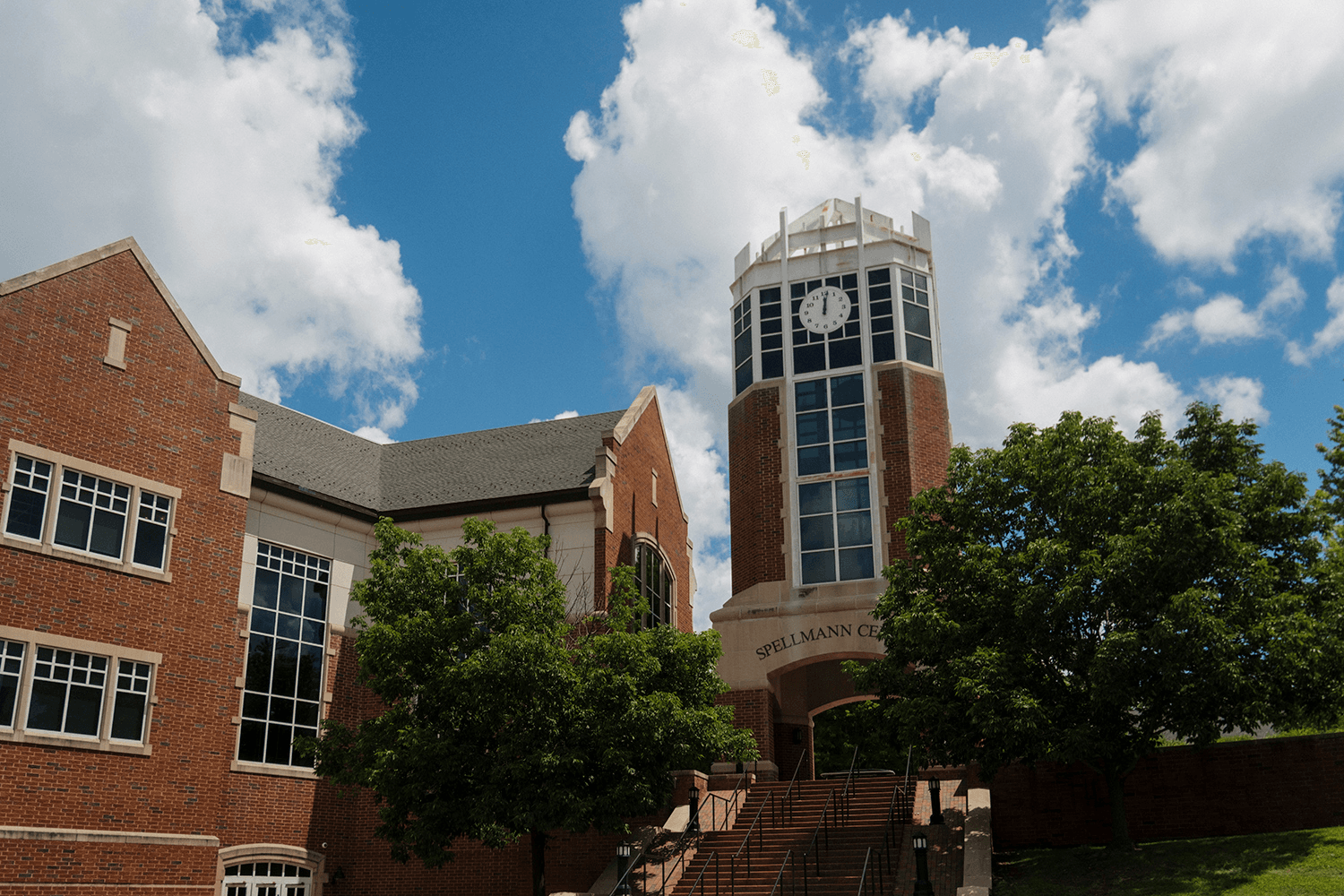

What the grade never tells you
A full academic-year pilot pairing written submissions with short AI-supported oral assessments, used to spot disengagement risk before a final grade revealed it too late.
Read the findings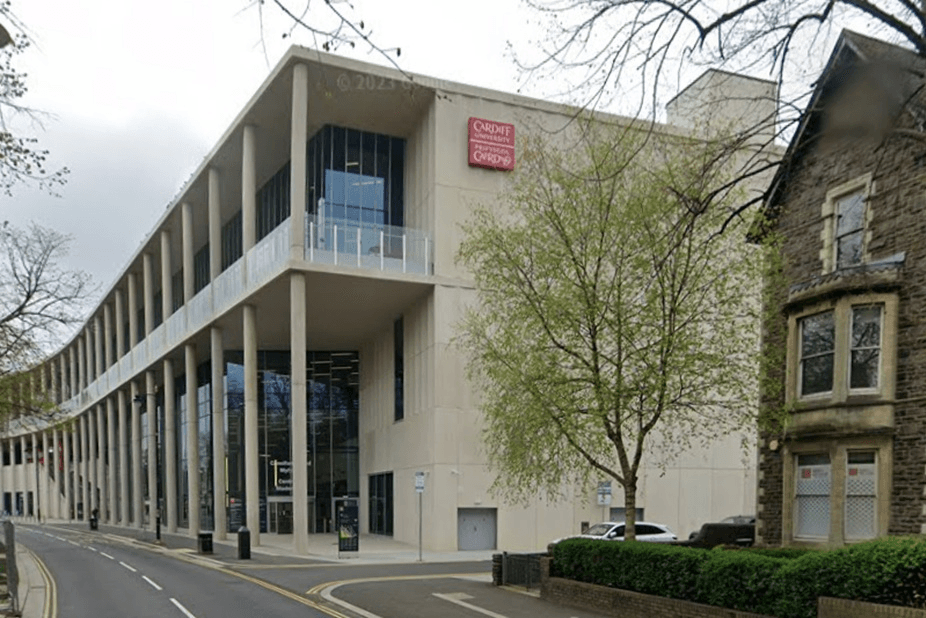

What written assessment cannot see
A controlled study at Cardiff Business School comparing a written test, a traditional viva and an AI-supported viva across 24 postgraduate students.
Read the findingsLindenwood University · Spring 2026
What the grade never tells you
When a student falls behind, the question that matters most is not why it happened. It is whether anyone found out in time. Across a full academic-year pilot running from Fall 2025 through Spring 2026, Lindenwood explored how to identify when a student is at risk of disengaging before a final grade reveals the problem too late to act.
The institution
Founded in 1827, Lindenwood is one of the oldest universities in Missouri, a private institution committed to developing graduates who are genuinely prepared for what comes next.
What Integrevise does
After submitting written work, students take part in a short AI-supported dialogue, explaining and justifying their work in their own words. The platform does not grade. It reveals whether genuine understanding sits behind the work.
of students reported stronger awareness of their understanding after explaining their work aloud.
of participating students felt earlier visibility into weak understanding could prevent disengagement.
What we found
Early identification
Learning gaps surfaced what written submissions alone had not revealed. Tutor feedback confirmed the oral assessment highlighted several amber and red indicators, pointing to gaps in understanding or application that were not visible in the writing itself.
Deeper engagement
Students engaged more deeply when they knew they would need to explain their work. Several described approaching assignments differently, reflecting more critically on their understanding rather than submitting and moving on.
Embedded workflow
Engagement was strongest when the viva was built directly into the assignment workflow. Embedded in the natural assessment process, completion and participation held up well, showing how cleanly the platform fits into existing course design.
The scores from the viva did indicate several amber and red areas, indicating students did not either understand the material or the application of the questions.
Knowing that there was an examination of my knowledge coming, I was more prepared and learned more about the topic beforehand.
It helped me reflect more deeply on my paper and asked questions that pushed my thinking further.
Retention sits at the heart of every institution's strategy
A student who withdraws at the end of Year 1 represents three to four years of lost tuition revenue, alongside replacement recruitment costs that far exceed the cost of support. When those students remain invisible until a grade signals the problem, the window for meaningful intervention has already closed.
retention
can represent hundreds of thousands in preserved tuition revenue annually.
One student, surfaced in time
During the pilot, a student revealed mid-session that they had been working from the wrong supplemental material for weeks without realising it. Under a conventional assessment model, this likely would not have surfaced until after grading. Instead, the signal emerged during the assessment itself, while support was still possible.

Cardiff University · Cardiff Business School · Spring 2026
What written assessment cannot see
Written tests can show what students recognise. Oral assessment reveals whether they can explain, justify and apply what they know. This controlled study at Cardiff Business School explored whether AI-supported vivas can deliver that depth consistently and at scale, comparing a written test, a traditional viva and an AI-supported viva across a postgraduate cohort.
The study at a glance
The MCQ was administered before group allocation and before any viva activity, acting as a baseline measure of prior knowledge. With no significant differences across groups at baseline, viva performance can be read as reflecting the assessment process rather than student ability.
- Design
- Three-condition controlled comparison
- Cohort
- 24 postgraduate students
- Conditions
- Control (n=7) · AI viva (n=7) · Traditional viva (n=8)
- Baseline measure
- MCQ administered prior to all viva activity
- Outcome measure
- Viva performance, scored as a percentage
Three findings, one assessment signal
Groups entered with comparable baseline knowledge
There were no statistically significant differences in MCQ performance across the three groups. Students entered the viva phase with similar prior knowledge, strengthening the validity of the comparison.
Oral assessment revealed deeper understanding
MCQ scores were uniformly high, but viva scores were lower and more varied. The viva required students to explain, justify and apply knowledge rather than simply recognise correct answers.
AI-supported viva applied consistent criteria
The study showed a significant difference between traditional and AI viva scores. Traditional examiners can scaffold and interpret responses, while the AI applied the same criteria to every student.
From findings to practice
Deeper measurement
Tests explanation, justification and application, reaching cognitive processes written formats often miss.
Consistent evaluation
Applies the same criteria across students, supporting more comparable assessment evidence.
Immediate feedback
Gives students structured feedback quickly, while the learning moment is still live.
Cohort intelligence
Shows patterns of misunderstanding across a cohort, helping module leaders target support earlier.
One consistent standard for every student
The AI-supported viva applied predefined criteria consistently across every participant, requiring students to articulate their understanding without the implicit guidance a human examiner can offer. Where traditional vivas let examiners adapt questions and scaffold answers, the AI measured what each student could independently explain, producing a clearer and more comparable signal of genuine understanding.
Early evidence, with a peer-reviewed paper in development
These results come from a focused study of 24 postgraduate students, an encouraging first signal the team is now building on. A peer-reviewed paper is in development, and the next phase expands the work across larger cohorts, multiple modules and varied disciplines to confirm the pattern at scale.
