





Higher Education
Integrevise is used in universities to confirm that coursework, dissertations, and presentations reflect a student's own understanding, protecting academic integrity as AI use grows.
Assessment Intelligence Platform
When AI can produce the written work, the work alone no longer proves what a student understands. Integrevise rebuilds that proof with a structured, evidence-based approach that confirms what learners genuinely know.
Talk to our team


Personal enough for one learner, structured enough for thousands.
Integrevise combines signals from across multiple sessions into an evolving model of how each learner thinks, so performance shows as a developing picture rather than a single snapshot.
When cohorts repeatedly struggle with the same learning outcome, Integrevise surfaces the pattern and points to where the curriculum may need to change.
Learners justify and defend their submission through a series of adaptive questions, so you know the understanding behind the work is genuinely their own, and you can stand behind every grade you award.
See how universities and qualification providers are using Integrevise to verify what learners genuinely understand.

Integrevise is used in universities to confirm that coursework, dissertations, and presentations reflect a student's own understanding, protecting academic integrity as AI use grows.

Integrevise is used by qualification providers to verify that candidates can apply what they've learned, so a qualification reflects genuine competence, not just a completed assignment.
Integrevise uses an evidence-based method to verify understanding, whether learners talk through submitted coursework in an adaptive viva or present their work in real time.
Learners talk through their submission in an adaptive, conversational viva, where Integrevise probes their reasoning to confirm the understanding is genuinely their own.
Lecturers, professors, and faculty using Integrevise.

By prompting students to explain their thinking in a structured, low-pressure environment, it makes their understanding far more visible and highlights where they need to improve in a way that’s difficult to achieve through written work alone.

What stood out immediately was the clarity it gives us. You can see exactly who understands their work and who doesn’t. It removes the guesswork from marking and gives us something far more defensible.

Integrevise strikes a strong balance between deepening student understanding and maintaining academic integrity — which makes it a valuable tool for modern higher education.

Providing students with the opportunity to practice their presentations before the real assessment helped build their confidence and readiness.

Given the importance of demonstrating critical thinking and not just a focus on the output, being able to probe a student beyond their presentation adds something that’s usually missing. It gives you a clearer sense of what they actually understand, so you can assign and justify grades with confidence.

Tools like this create a structured way for students to practice articulating their thinking, which is something we’re actively trying to build in the classroom. It has real potential to strengthen oracy and make student understanding more visible.

Integrevise creates a space where students have to demonstrate genuine understanding, not just submit polished work. It helps surface gaps in thinking in ways that align with good pedagogy rather than center surveillance.

Being able to test a student’s understanding through a structured conversation adds a layer that written work alone can’t provide. It gives you a clearer, more reliable sense of whether they actually understand the material, especially in an environment where AI use is increasing.

Having a clearer view of where students are struggling, rather than relying on what they choose to share, would make it much easier to intervene early and direct them to the right support before issues escalate.
See how universities are using Integrevise to surface understanding earlier and act on student risk before a final grade does.

Case study · Spring 2026
Across a full academic-year pilot, Lindenwood paired written submissions with short AI-supported oral assessments. The dialogue surfaced knowledge gaps that the writing alone never revealed, giving tutors earlier visibility into student risk while there was still time to act.
Read the case studyReported stronger confidence in their understanding after explaining their work aloud
Felt the approach could help prevent disengagement
Case study · Spring 2026
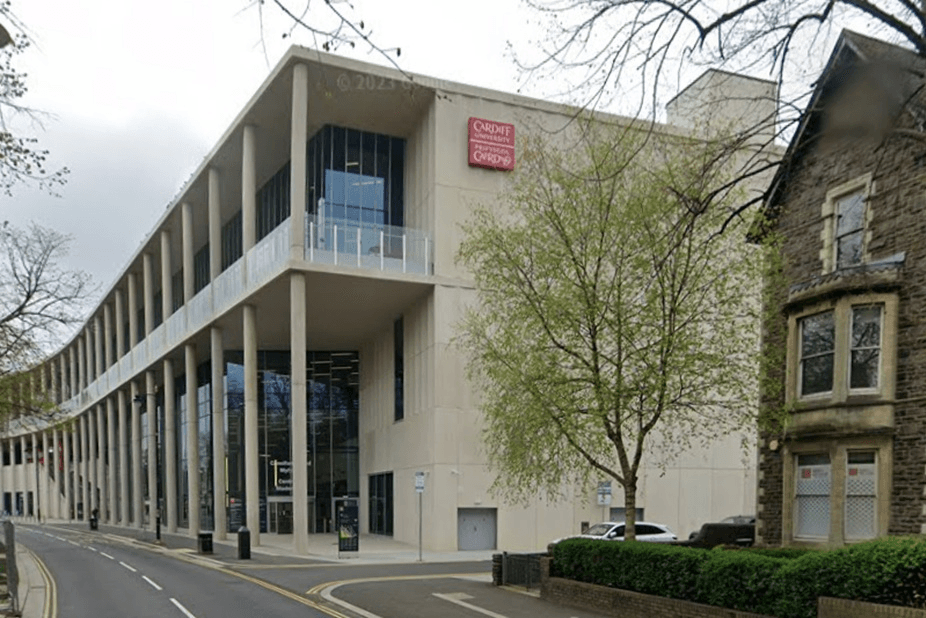
In a controlled study at Cardiff Business School, students sat a written test, a traditional viva and an AI-supported viva. They entered with comparable knowledge, yet the oral assessment exposed gaps the near-perfect written scores hid, separating what students recognised from what they could actually explain.
Read the case studyTrust and governance
Adopt with confidence. Oversight, auditability and privacy are built in from day one, so your institution stays in control of how every assessment runs.
Every session produces a portable evidence record, available when required for an appeal.
Your institution stays in control of its data. No model training on student work, and no third-party sharing.
Data is encrypted in transit and at rest, backed by enterprise-grade monitoring and secure infrastructure standards.
Tune thresholds, flags and review steps to match your own academic policies.